
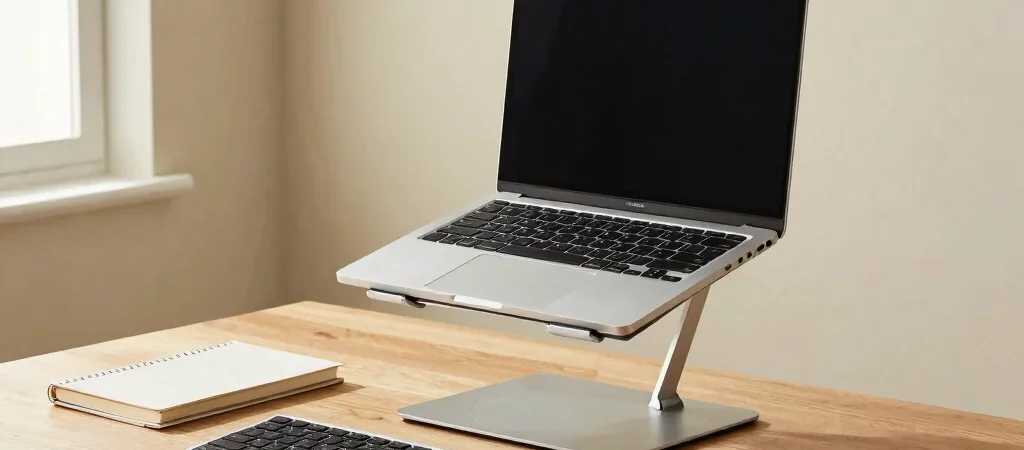
A laptop stand can look like a simple way to tidy a desk, until the screen is higher and the built-in keyboard is no longer comfortable to use. The right choice depends less on appearance than on how long you work, what fits on your desk, and whether you are willing to add a separate keyboard and mouse.
Decide what the stand must do
If you mainly want to lift the laptop for a video call or free a little surface space, a compact fixed stand may be enough. If you type on the laptop for much of the day, raising the screen usually means planning for an external keyboard and mouse so the typing position does not rise with it.
Adjustable models offer flexibility for different tasks, but their hinges and base can take up more room. Check the stand’s stated height range, footprint, and compatibility with your laptop’s size and weight rather than assuming every model fits every device.
Compare the real footprint
Measure the desk depth and mark out the stand’s base before ordering. Include space for the laptop, a separate keyboard if needed, and somewhere to set a notebook or mouse; otherwise, the stand may improve the screen position while making the rest of the workspace less usable.
A foldable stand is easier to put away, but it still needs a storage spot and may be less convenient if you set it up repeatedly. A fixed stand can feel simpler for a dedicated desk, though it is a poor fit for a surface that also serves meals or study sessions.
Check details before buying
Look for clear product dimensions, adjustment details, material information, and any stated ventilation or stability features. Read recent buyer feedback for recurring fit or wobble concerns, while remembering that a review describes one person’s device and setup, not a guarantee for yours.
We compare the details that matter in a real room, then explain what to consider before choosing. If you follow a product link from this publication, Better Space Lab may earn a commission at no extra cost to you; that does not change the practical trade-offs worth checking. Measure your desk first, then choose the least complicated stand that supports the way you actually work.